Wednesday, February 25, 2015

Signals: Wave Energy... Unequal Inequality... Craft Villages... and more

Vol. 1, No. 9 | March 2, 2015 | AAI Foresight

Inside Foresight Signals

> Wave Energy Gears Up
> Income Inequality Is Unequal in Europe
> “Craft Villages” May Succumb to Globalization
> Battery Challenges in Coming Years: Report from Timothy C. Mack
> Announcements from AAI Foresight


Wave Energy Gears Up


Harvesting the power of the oceans to produce cheap electricity has long been a dream of green engineering. So far, however, wave energy has been hampered by the inconsistencies of waves themselves, which vary in timing and height, making it difficult to create a reliable conversion system.

Now, a Swedish company, CorPower Ocean, reports that its new wave system can anticipate the sizes of incoming waves so that it can capture the entire spectrum of wave energy. As a result, the company claims, it can generate five times more energy than current state-of the-art systems and for a third of the cost.

The CorPower system also benefits from a “cascade” gear, designed at Sweden’s Royal Institute of Technology (KHT), which efficiently converts linear motion into rotation. Its numerous small pinions and wheels enable the device to handle heavy loads and high velocities.

The company plans to install a half-scale pilot version of the technology in November 2015 in cooperation with the multinational electric utility company Iberdrola.

Source: KHT Royal Institute of Technology. Images: Courtesy of CorPower Ocean.

Signals: electricity, energy, green engineering


Income Inequality Is Unequal in Europe


The income gap widened in two-thirds of the European Union between 2006 and 2011, but inequality decreased in at least eight EU countries, notably Portugal and Greece, according to a study by the University of Barcelona.

Hardest hit by income inequality were Spain, Cyprus, Hungary, and Slovakia, but the gap was due mostly to increased unemployment rather than to changes in income levels among the employed populations. Further analysis of post-recession data will shed light on the impacts “of precarious forms of work, for instance part-time jobs, on wage inequality,” researcher Raúl Ramos said in a press statement.

In many cases, governments have attempted to combat wage inequality by increasing the minimum wage; however, the real purchasing power of these wages were reduced by the recession. The study also found that policies aimed at improving competition helped reduce inequality in annual wages.


Signals: economics, European Union, inequality


“Craft Villages” May Succumb to Globalization


The twin forces of globalization and urbanization offer both opportunities and challenges for rural villages. In Vietnam, a system of specialized “craft villages” has offered rice farmers off-season employment and security for centuries; while modernized production technologies and newly opened markets gave them a boost in the 1980s, new threats to their existence have recently emerged.

Vietnam has thousands of craft villages—more than 500 surrounding Hanoi alone—each specializing in a particular craft, such as artworks, textiles, woven goods, or religious objects. These ancient village systems self-organize into related clusters to enhance productivity and labor resources. They now provide work for almost 20% of the rural population of working age, with far better incomes than from agricultural work, according to studies led by Sylvie Fanchette of Institut de Recherche pour le Développement (IRD).

The craft village system began to flourish with improved productivity and access to export markets, but new competition quickly entered in the form of foreign manufacturers seeking cheap labor, the IRD researchers note. The influx of heavy industry has also led to competition for the agricultural land that the craft villages rely on.

As the craft villages succumb to globalization and urbanization, the skills developed and handed down by generations of craft workers may disappear, as well.

Source: IRD. Image: Michael Foley Photography, via Flickr (Creative Commons).

Signals: crafts, culture, globalization, industrialization, urbanization, Vietnam


Battery Challenges in Coming Years: Report from Timothy C. Mack


Electric vehicles (EVs) continue to climb in attractiveness, with the Tesla Model S winning acceleration comparisons hands down. Their environmental advantages are clear, but the cost and recharge requirements of automobile batteries continue to stand in the path of broad market acceptance of EVs.

A good deal of battery science is now proceeding on trial and error; when those innovations work, the reason why is still often unclear, as BusinessWeek writer Steve LeVine explains in his new book, The Powerhouse (Viking, 2015). In fact, it may be likely that more progress in battery technology can be achieved incrementally through engineering or manufacturing approaches (or even by lightly tweaking the chemistry of battery materials), rather than through dramatic new breakthroughs—which may include unforeseen pitfalls down the road.

Futurists may often become enamored by the promise of a new technology and its transformative potential while not giving the practical side of technology adoption enough thought, especially potential operational obstacles. This is particularly true in the new materials arenas, where nanotech and composite materials are literally creating new science and the rules of the game are still being discovered.  Read more 

Timothy C. Mack is the managing principal of AAI Foresight Inc. This report was excerpted from the Foresight Signals Blog. Image: Tesla Motors, via Facebook.

Signals: batteries, electric vehicles, materials engineering, transportation


Announcements from AAI Foresight


* New Logo! Thanks go to graphic artist Lisa Mathias for our spiffy new logo for this newsletter! Formerly the art director of the World Future Society, Lisa is also a gifted studio artist. Visit her graphics portfolio at Lisa Mathias Design and her fine art portfolio at LisaMathias.com.

* “Foresight Reports” Publication Project Launched. AAI Foresight has released its first industry forecast white paper, “The Future of Retail Marketing,” to introduce a series of semiannual publications for the firm’s clients. The reports, which will initially be free of charge, will be available to logged-in visitors at the AAI Foresight Web site.

The goal of Foresight Reports is to demonstrate the application of sound foresight techniques to improve the analysis of a key issue affecting our future, be it an economic sector or an ecosystem. The papers will largely be invited by AAI Foresight or written by members of its established consulting partners, but we will also consider submissions. Please contact Tim Mack or Cindy Wagner for details.


Send us your signals! News about your work and other tips are welcome. Contact Cynthia G. Wagner, consulting editor.  

Want more signals from AAI Foresight? Check out the blog! Log in to add comments.

Feel free to share Foresight Signals with your networks and to submit any stories, tips, or “signals” of trends emerging on the horizon that we can share with other stakeholders and the foresight community. And if you’re interested in becoming a blogger for FS, please contact Cindy Wagner, our consulting editor, at CynthiaGWagner@gmail.com


Foresight Signals is a publication of AAI Foresight


1619 Main Street #1172
Freeland, WA 98249

Managing Principal: Timothy C. Mack
tcmack333@gmail.com | 202-431-1652

Webmaster and IT Consultant: Tom Warner

Consulting Editor: Cynthia G. Wagner


Sunday, February 22, 2015

Battery Challenges in Coming Years

By Timothy C. Mack

Electric vehicles (EVs) continue to climb in attractiveness, with the Tesla Model S winning acceleration comparisons hands down. Their environmental advantages are clear, but the cost and recharge requirements of automobile batteries continue to stand in the path of broad market acceptance of EVs. Breakthroughs in this area are announced regularly; however, any celebrations might be followed by an “Oops!” announcement, or the “breakthrough” may gain no real momentum and just fade away quietly.


While lithium ion battery technology continues to show promise, some of the mechanics of how these batteries actually work remains a mystery, as a small change in configuration can produce large, unexpected, and often negative results. Certain battery materials may start out very promising, but, for reasons not yet understood, diminish in effectiveness over time, as BusinessWeek writer Steve LeVine explains in his new book, The Powerhouse: Inside the Invention of a Battery to Save the World (Viking, 2015). The chemical and physical interactions of these new materials have the nature of a just-discovered continent—where the dynamics are not completely clear.

A good deal of battery science is now proceeding on trial and error; when those innovations work, the reason why is still often unclear. In fact, it may be likely that more progress in battery technology can be achieved incrementally through engineering or manufacturing approaches (or even by lightly tweaking the chemistry of battery materials), rather than through dramatic new breakthroughs—which may include unforeseen pitfalls down the road.

The adoption of EVs remains a very small portion of the car market as a whole. This is in part because even the most extravagant industry projections of 200 miles on a single change fall significantly short of the 350-mile average range for a tank of gasoline. And the $35,000 hoped-for price of a bargain Tesla is still $20,000 more than a low-end gasoline car.

However, the spirit of discovery continues to thrive. LeVine reports that work at Argonne National Laboratory is making new advances with previously problematic technology by using lower voltages and new additives in trace amounts. But it is still a tough business for technology startups. As one former executive of an innovative (but now bankrupt) battery company recently said, “Energy storage is a game [best] played by big players, because there are so many things that can go wrong in a battery.”


Note: Futurists may often become enamored by the promise of a new technology and its transformative potential while not giving the practical side of technology adoption enough thought, especially potential operational obstacles. This is particularly true in the new materials arenas, where nanotech and composite materials are literally creating new science and the rules of the game are still being discovered.

While taking a “wait and see” approach sometimes tries the patience, it is preferable to issuing a rather noticeable public retraction for technological promises that can’t be kept.

Timothy C. Mack is managing principal of AAI Foresight Inc.

Images courtesy of Tesla Motors (via Facebook) and Argonne National Laboratory (via Flickr).

Wednesday, February 11, 2015

Signals: "Octobot" ... Norway's Warming Fossils... Top Futurist Think Tanks... and more

Vol. 1, No. 8 | February 17, 2015 | AAI Foresight 

Inside Foresight SIGNALS

> Octobot: Octopus-Inspired Robot Could Accelerate Ocean Exploration
> Why Global Warming Has Archaeologists Scrambling
> Growing Pains for Solar Power: Report from Timothy C. Mack
> Futurists and Foresight in the News: Ranking the Think Tanks

Octobot: Octopus-Inspired Robot Could Accelerate Ocean Exploration


Darting through water like a child’s deflating balloon flies through the air, a new octopus-inspired robot promises to accelerate ocean research and development.

Most underwater vehicles are streamlined to reduce drag, but the octobot developed at University of Southampton draws inspiration from cephalopods, which expand their bodies with water that they then quickly expel in order to propel themselves.


Scaling up the size of the prototype robots could enable oceanographers to equip them with instrumentation or other payloads.


Reference: Gabriel Weymouth (University of Southampton), Vignesh Subramaniam (Singapore-MIT Alliance for Research and Technology), and Michael Triantafyllou (MIT), “Ultra-fast escape maneuver of an octopus-inspired robot,” Bioinspiration and Biomimetics (Vol. 10, No. 1), published February 2, 2015. doi:10.1088/1748-3190/10/1/016016

Signals: biomimicry, engineering, oceanography, robotics

Why Global Warming Has Archaeologists Scrambling


Ancient arrowheads, wooden shafts, and even shoes are starting to turn up in a once-frozen landscape, but archaeologists in Norway are not necessarily rejoicing. As ancient snow patches begin to melt—the ice and snow that protected such artefacts for millennia—there may be little time to sort and preserve these pieces of the past.

Today’s Norway is too hot in the summer and dry in the winter for permanent snow patches and glaciers to form, and those that are there now have survived in small dots tucked away from the sun’s heat and the wind’s power. As the climate changes, however, these small, ancient snow patches are disappearing at an alarming rate, according to scientists at the Norwegian University of Science and Technology.

Geologists are using georadar to measure the thickness of glaciers and snow patches, as well as GPS technologies to track movement (glaciers are moving masses of ice and snow, while the snow patches are stationary).


The researchers have found that some of Norway’s oldest snow patches—5,000 years—are actually glaciers and are now thinning. This makes them more vulnerable to the elements and more likely to disappear, leaving whatever they once protected also exposed and vulnerable.

The loss of the snow patches will also have an effect on wildlife such as reindeer, the scientists warn.


Signals: archaeology, climate change, ecosystems, geology

Growing Pains for Solar Power: Report from Timothy C. Mack


The Kauai Island Utility Cooperative in the Hawaiian Islands would seem to be the poster child for the increasing market penetration of solar power. KIUC has quintupled utility-scale solar capacity over the past year, but the path to the cutting edge has not been an easy one.

As MIT Technology Review contributing editor Peter Fairley recently reported, KIUC’s growth problems are related to power fluctuations and the need for back-up generators powered by diesel or gasoline, as well as to the failure of the utility’s lead-acid battery banks. KIUC is trying again with lithium-ion batteries, which are now rated for four to six times as many cycles and can absorb any excess solar power generation that might occur, Fairley reports.


The lesson here is that foresight tools will always have a useful role in accurate technology assessment and adoption analysis, especially concerning the systemic impacts of new technology applications in new settings and configurations.

Timothy C. Mack is the managing principal of AAI Foresight Inc. This report was adapted from the Foresight SIGNALS Blog. Image: Courtesy of Kauai Island Utility Cooperative.

Futurists and Foresight in the News: Ranking the Think Tanks


Future-oriented think tanks dominated what has become like the Academy Awards for public policy analysis. When the 2014 edition of the Global Go To Think Tank Index Report was released in January by University of Pennsylvania’s Think Tanks and Civil Societies Program, U.S.-based Brookings Institution took home the prize as the top think tank in the world, followed by the U.K.’s Chatham House.

Prepared by program director James McGann, the report highlights challenges and trends facing think tanks worldwide, including decreased funding from private and public donors, along with donors’ focus on short-term issues, and growing competition from advocacy groups for the attention of both policy makers and the public.


Though most think tanks have an implicit mission to improve the future, some groups, like the RAND Corporation and The Millennium Project, have been pioneers in developing and applying foresight techniques in their analysis of issues critical to the future. Among the future-oriented think tanks honored in the 2014 report are:

* RAND Corporation: #7 in Top Think Tanks Worldwide and #6 in U.S.; #1 in Best Transdisciplinary Research Program; #2 in Defense and National Security; #2 in Education Policy; #2 in Domestic Health Policy; #3 in Social Policy; #4 in Global Health Policy; #4 in Science and Technology; #5 in Energy and Resource Policy; #6 in International Economic Policy; #6 in Most Significant Impact on Public Policy; #7 in Domestic Economic Policy; #9 in Foreign Policy and International Affairs; #19 in International Development; #30 in Environment

* Woodrow Wilson International Center for Scholars: #10 in Top Think Tanks Worldwide and #5 in the U.S.; #2 in Transdisciplinary Research Program; #4 in International Development; #8 in Foreign Policy and International Affairs; #14 in Most Significant Impact on Public Policy; #27 in Defense and National Security; #5 in Think Tanks to Watch

* Pew Research Center: #7 in Top Think Tanks in the United States, also earning high rankings for use of media (#1), use of the Internet (#3), and advocacy campaign (#7).

* World Resources Institute: #15 in Top Think Tanks in the United States; #1 in Environment; #2 in Energy and Resource Policy; #9 in Transdisciplinary Research Program

* Resources for the Future: #34 in Top Think Tanks in the United States; #9 in Energy and Resource Policy; #11 in Environment; #18 Best New Idea or Paradigm

* Hudson Institute: #31 in Top Think Tanks in the United States; #41 in Foreign Policy and International Affairs; #58 in International Development; #65 in Defense and National Security

* Worldwatch Institute: #35 in Top Think Tanks in the United States; #3 in Environment

* Information Technology & Innovation Foundation: #49 in Top Think Tanks in the United States; #2 in Science and Technology

* Canada 2020: #30 in Top Think Tanks in Canada and Mexico and #59 in Think Tanks to Watch

* Institucion Futuro (Spain): #137 in Top Think Tanks Worldwide and #72 in Western Europe

* The Millennium Project: #6 in Best New Idea or Paradigm. The report did not specify a particular new idea or paradigm, but The Millennium Project has recently developed the Global Futures Intelligence System (GFIS), which certainly merits note.

The Best New Idea or Paradigm by a Think Tank was one of several special achievement categories added in 2013 (along with best conference, best collaboration, best use of social networks, and others), giving the peer nominators and reviewers more opportunities to highlight outstanding work by the world’s cadre of professional thinkers.


Signals: institutions, public policy, think tanks


Send us your signals! News about your work and other tips are welcome. Contact Cynthia G. Wagner, consulting editor.  

Want more signals from AAI Foresight? Check out the blog! Log in to add comments.

Feel free to share Foresight SIGNALS with your networks and to submit any stories, tips, or “signals” of trends emerging on the horizon that we can share with other stakeholders and the foresight community. And if you’re interested in becoming a blogger for FS, please contact Cindy Wagner, our consulting editor, at CynthiaGWagner@gmail.com


Foresight SIGNALS is a publication of AAI Foresight

1619 Main Street #1172
Freeland, WA 98249

Managing Principal: Timothy C. Mack
tcmack333@gmail.com | 202-431-1652

Webmaster and IT Consultant: Tom Warner

Consulting Editor: Cynthia G. Wagner


Friday, February 6, 2015

The Solar Power Industry and Its Growing Pains

By Timothy C. Mack

The Kauai Island Utility Cooperative in the Hawaiian Islands would seem to be the poster child for the increasing market penetration of solar power. KIUC has quintupled utility-scale solar capacity over the past year and soon may approach 80% of peak power generation for solar on the island, as MIT Technology Review contributing editor Peter Fairley recently reported.

However, the path to the cutting edge has not been an easy one, underlining that basic futurist warning not to overlook the unintended consequences and systemic weak spots of technological innovation.

KIUC’s growth-related problems are grounded in that perennial challenge of renewable energy, the curse of power fluctuation, Fairley notes. Even in high sun-day settings like Hawaii, there are always a few clouds that pass by, sending power outputs dropping in less than a minute by 70% to 80%. The result is alternating current (AC) levels that fall below 60 hertz, which may damage customer equipment or even trigger a local blackout.

Naturally, utilities have installed diesel or gasoline-fired generators to take up that frequency droop, as well as large battery banks. But those generators ultimately wear out from frequent heavy use. They also pump petro-carbons into the atmosphere while continuing to consume petroleum, instead of largely replacing them with clean, renewable power.

On the battery side, the 4.5 megawatt bursts of replacement power needed to offset AC disruptions soon wore KIUC’s lead-acid battery banks out: They failed in one-quarter of the lifetime promised by the supplier. As Fairley reports, the utility is trying again with lithium-ion batteries, which are now rated for four to six times as many cycles and can absorb any excess solar power generation that might occur.

Judging from the subsequent (and related) bankruptcy of KIUC’s initial battery supplier, it is clear that performance projections for new applications are always an iffy business.

Note: It appears that foresight tools will always have a useful role in accurate technology assessment and adoption analysis, especially concerning the systemic impacts of new technology applications in new settings and configurations. In this case, the economic imperative to meet local energy needs on one side, and to make sales quotas on the other, led development partners to underestimate the challenges of such a massive conversion to renewables.

Balancing of normative optimism about desired outcomes with realistic assessment of possible shortfalls is essential for effective technology upgrades, and the cross-assessment of opportunities and potential threats is a central part of responsible foresight.

Timothy C. Mack is managing principal of AAI Foresight Inc.


Thursday, January 29, 2015

Signals: Minor Infections, Major Problems... Waterless Recycling... Autonomous Autos... and more


Vol. 1, No. 7 | February 2, 2015 | AAI Foresight 

Inside Foresight SIGNALS

> Minor or Hidden Infections May Accelerate Mortality
> Dry Innovation for Plastics Recycling
> Liability and the Self-Driving Car: Report from Timothy Mack
> Scholarly Researchers Embrace Skepticism
> Futurists and Foresight in the News

Minor or Hidden Infections May Accelerate Mortality


If you escaped that horrific flu or other infection that’s been going around in your neighborhood, school, or workplace, you may count yourself lucky. Maybe you only got a mild infection, or felt well and kept on working just as effectively as ever. The bad news is that such hidden or mild, untreated infections could be shortening your life.

In studies of migratory birds with mild malaria infections, researchers at Sweden’s Lund University discovered that the cumulative effects of chronic infections shortened the birds’ telomeres—the caps on chromosomes that protect DNA—accelerating the aging process.

“The small, non-measureable effects of the chronic disease appear to underlie the accelerated shortening of the telomeres. When the telomeres get too short, this has a fatal effect and causes premature death,” said Lund researcher Dennis Hasselquist of the Department of Biology, a member of the research team. “If this is a general mechanism for any type of mild, chronic infection, which is quite possible, it will mean our study is of major interest to understand the impact that mild illnesses can have on other organisms, including humans.”

Reference: M. Asghar, D. Hasselquist, B. Hansson, P. Zehtindjiev, H. Westerdahl, S. Bensch, “Hidden costs of infection: Chronic malaria accelerates telomere degradation and senescence in wild birds,” Science (January 23, 2015), Vol. 347, No. 6220, pp. 436-4381. DOI: 10.1126/science.1261121 

Signals: aging, health, longevity, telomeres


Dry Innovation for Plastics Recycling


Water-intensive processes for recycling plastic waste could one day be replaced with new techniques that don’t require liquids. A dry recycling process developed by Ak Inovex of Mexico also promises to reduce energy consumption, use less space, and cut costs.

Using customizable machinery, the process can work with any type of plastic material, such as Styrofoam and polystyrene, to produce small plastic beads or pellets. Rather than dehydrating the original materials at high heat and then cooling them with water, Ak Inovex uses a patent-pending process of cooling through contact with special walls.

The company now plans to add biodetergents to the cleaning process for the recycled plastic products, thus keeping water use and costs at the lowest possible levels. Ak Inovex was a participant in Cleantech Challenge Mexico, a contest to promote the development of green companies. (See also “Power Pedaling with Bamboo Bike,” Foresight SIGNALS, Vol. 1, no. 6.)

Source: Investigación y Desarrollo [in Spanish].

Signals: green technology, innovation, Mexico, plastics, recycling, water


Liability and the Self-Driving Car: Report from Timothy Mack


The auto industry is clearly convinced that the question of autonomous vehicles is “not if, but when.” But the potential impacts on the industry, such as liability issues, are less clear.

Motor Trend analyst Frank Markus notes a number of relatively clear benefits of a working national autonomous-vehicle system, such as reduced accidents, increased mobility for nondrivers, reduced fuel consumption, and more intelligent driving patterns. 

But one of the most interesting questions regards autonomous and driver-controlled vehicles sharing the same roadways: If there are far fewer accidents, there will still be accidents, but probably fewer insurers to cover them. Who is responsible when accidents happen? Who pays? Rather than owners of autonomous vehicles taking out insurance (and paying premiums), would it fall on manufacturers to indemnify their products?

One possibility is public/private special compensation funds to underwrite unintended consequences. Owners of older, non-autonomous cars might be required to financially subsidize the rollout of presumably safer autonomous vehicles and road systems. Of course, manufacturers’ liability remains a toss-up in any court of law.

Timothy Mack is the managing principal of AAI Foresight Inc. This report was adapted from the Foresight SIGNALS Blog. Image credit: Sam Churchill, via Flickr (Creative Commons license).

Signals: AI, autonomous vehicles, insurance, law, transportation


Scholarly Researchers Embrace Skepticism


A journal devoted to exploring the philosophical concept of skepticism has now been included in Scopus, a database of peer-reviewed literature that covers nearly 22,000 titles by 5,000 publishers worldwide. Scopus offers researchers wide access to tools to facilitate tracking, analysis, and visualization of research.

Brill’s International Journal for the Study of Skepticism, edited by Diego E. Machuca (CONICET, Argentina) and Duncan H. Pritchard (University of Edinburgh), publishes articles and organizes symposiums on all aspects of skeptical thought and current problems, including debates on epistemology, metaethics, and the philosophy of religion, among many other topics.

“The journal is fully committed to the highest standards of clarity and rigor, and serves as a forum for debate and exchange of ideas among leading international philosophers and scholars,” according to its mission statement.

Brill is an international academic publisher based in Lieden, the Netherlands, covering Middle East and Islamic Studies, Asian Studies, Classical Studies, History, Biblical and Religious Studies, Language and Linguistics, Biology, International Law, and more.

Details: Brill press release. Follow @Scopus on Twitter.

Signals: academic publishing, philosophy, research, skepticism


Futurists and Foresight in the News


Global Strategic Foresight Community: The World Economic Forum has established a new future-oriented interest group comprising leaders and stakeholders in government, industry, and the foresight profession. Among the participants are The Art of the Long View author Peter Schwartz of Salesforce.com, The Millennium Project founder Jerome C. Glenn, NATO strategic analyst Stephanie Babst, and Julius Gatune of the African Centre for Economic Transformation. The GSFC will “provide a peer network to compare and contrast insights as well as to positively shape future-related industry, regional and global agendas.” Details 


Survey on New Approaches in Foresight: Futurists around the world often develop new methodologies, which may affect outcomes in their foresight work. To better understand these new approaches and their impacts on science, technology, and innovation policy around the world, particularly Southeast Asia, The Future Impacts Consulting firm invites Foresight SIGNALS readers to participate in a brief survey (deadline February 6). Details: Contact Cornelia Daheim, daheim@future-impacts.de 

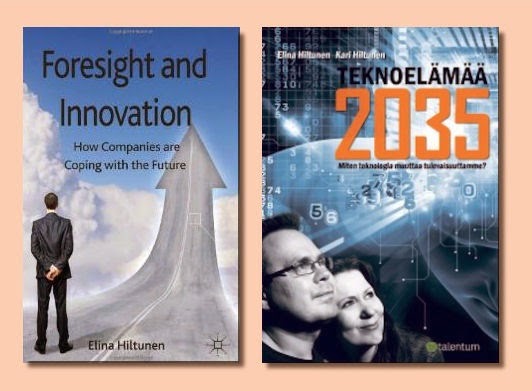
Technolife 2035: The English-language version of Teknoelämää 2035 by Finnish futurists Elina and Kari Hiltunen is now in progress and should be available soon. Elina’s previous book, Foresight and Innovation: How Companies are Coping with the Future, available in both Finnish and English, offers unique foresight tools that she has developed, such as the TrendWiki, Futures Windows, Strategic Serendipity, and the Futuropoly board game. Details 

Earth Policy Institute to Close: Leading environmental policy expert Lester R. Brown has announced his plans to retire from the think tank he founded in 2001. EPI will close by July this year, and the English-language versions of its principal publications will be housed at Rutgers University, Brown’s alma mater, in the new Lester R. Brown Reading Room. Brown’s career, spanning more than half a century, was devoted to measuring the planet’s resources and assessing its well-being, and issuing urgent warnings on such problems as climate change, overpopulation, and unsustainable consumption of resources. Details 


Frances Segraves, Former Futurist Staff Editor: We sadly report the passing of our friend and former colleague, pioneering newspaper journalist Frances Segraves, on January 14. She was 87. Frances was a staff editor for The Futurist magazine and the World Future Society Bulletin, retiring at the end of 1998. Before joining WFS to work with her longtime friends Ed and Sally Cornish, Frances was one of the first female reporters in the 1950s to cover hard news stories, working for The Frederick News, The Baltimore Sun, Bethlehem Globe-Times, and The Washington Star. She was also an activist in the anti-war and civil rights movements in the 1960s and 1970s. Details 


Send us your signals! News about your work and other tips are welcome. Contact Cynthia G. Wagner, consulting editor.  

Want more signals from AAI Foresight? Check out the blog! Log in to add comments.

Feel free to share Foresight SIGNALS with your networks and to submit any stories, tips, or “signals” of trends emerging on the horizon that we can share with other stakeholders and the foresight community. And if you’re interested in becoming a blogger for FS, please contact Cindy Wagner, our consulting editor, at CynthiaGWagner@gmail.com


Foresight SIGNALS is a publication of AAI Foresight

1619 Main Street #1172
Freeland, WA 98249

Managing Principal: Timothy C. Mack
tcmack333@gmail.com | 202-431-1652

Webmaster and IT Consultant: Tom Warner

Consulting Editor: Cynthia G. Wagner


Friday, January 23, 2015

The Legal Nightmares of Self-Driving Cars

By Timothy C. Mack

The auto industry is clearly convinced that the question of autonomous vehicles is “not if, but when,” writes Motor Trend technical director Frank Markus, reporting from a forum on Intelligent Transportation Systems in Detroit. Lux Research projects $87 billion in revenues by 2030. But the view is not so clear concerning how the longstanding legal guidelines around automotive liability will be affected.

Markus notes a number of relatively clear benefits of a working national system, such as reducing accidents by potentially as much as 95%, according to Bryant Walker Smith of the University of South Carolina law school. Other benefits: increased mobility for nondrivers, reduced fuel consumption, and intelligent driving patterns.  On the other side of the coin, intelligent transportation systems could increase road use and congestion, reduce public transportation usage, and create an economic slump in, for example, auto repair services.

But one of the most interesting questions regards the sharing of roadways between autonomous and driver-controlled vehicles: If there are far fewer accidents, there will still be accidents, but probably fewer insurers to cover them. Who is responsible when accidents happen? Who pays? Rather than owners of autonomous vehicles taking out insurance (and paying premiums), would it fall on manufacturers to indemnify their products?

One possibility is public/private special compensation funds to underwrite unintended consequences, such as how AI chooses to mitigate damage in an unavoidable accident. Owners of older, non-autonomous cars might be required to financially subsidize the rollout of presumably safer autonomous vehicles and road systems. Of course, manufacturers’ liability remains a toss-up in any court of law.

However, Markus reports, the RAND Corporation’s James Anderson and the Brookings Institution have both cautioned about proactively resolving liability issues through legislation without longitudinal experience to rely upon because, as Anderson has said, “we get such legislation wrong a lot.” 

Timothy C. Mack is the managing principal of AAI Foresight.

Image credits: Google, Sam Churchill


Tuesday, January 13, 2015

Signals: Bamboo Bike... Charitable Incentives... Futurists At Work... and more

Vol. 1, No. 6 | January 15, 2015 | AAI Foresight

Inside Foresight SIGNALS

> Power Pedaling with Bamboo Bike
> Philanthropy and Productivity
> Why Some Fossil Fuels Need to Stay in the Ground
> Book Note: Toward a Freakier Mind-Set
> Futurists at Work, Foresight in the News

Power Pedaling with Bamboo Bike


A bamboo bicycle under development in Mexico promises to be tougher, lighter, and less prone to heat, and thus an innovative way to replace metal parts with natural materials. But wait, there’s more: The bamboo bike will also generate energy.

Pedaling a bike creates kinetic energy, so the goal of the Bambootec consortium is to capture that energy through circuits in the rims and run it to converters and regulators in the system’s core under the seat. The energy is converted to electricity—about 10 volts—which can recharge mobile devices and a smartphone battery, and power a navigation dashboard on the handlebars, connected via Bluetooth.

The team’s goals now are to accelerate the charging process and to develop the machinery to scale the bamboo bike up for mass production. Bambootec, located in Yucatán, is a participant in Cleantech Challenge Mexico, a contest that promotes the development of green enterprises.

Source: Investigación y Desarrollo [in Spanish].

Signals: appropriate technology, bicycles, green energy, Mexico, renewable resources, sustainability, transportation


Philanthropy and Productivity


Encouraging workers to give at the office may turn out to be a good way to boost their productivity. A study at Britain’s University of Southampton found that, when subjects could choose the amount of performance-based pay they would share with charity, their performance increased considerably.

“A lot of studies have shown how financial incentives, like bonuses and stock options, can improve performance,” said the study’s lead author, University of Southampton economist Mirco Tonin, in a press statement. “But our results provide empirical support for the growing recognition that some workers are also motivated by advancing social causes through their efforts.”

While financial incentives like bonuses are still more effective at motivating workers, the difference is not as wide as many believe, suggests the study, to be published in Management Science. Tonin concludes that “firms willing to introduce corporate giving programs may want to consider giving employees the opportunity to ‘opt in.’”

Reference: “Corporate Philanthropy and Productivity: Evidence from an Online Real Effort Experiment,” Mirco Tonin and Michael Vlassopoulos, Management Science, DOI: 10.1287/mnsc.2014.1985

Signals: business, philanthropy, productivity


Why Some Fossil Fuels Need to Stay in the Ground


A large portion of the world’s untapped coal, oil, and natural gas needs to stay in the ground through 2050 in order to keep global warming from exceeding the internationally agreed limit of 2°C, warns a new study from University College London’s Institute for Sustainable Resources.

The study, published in the journal Nature, recommends that the Middle East leave 65% of its gas in the ground, and that 80% of the coal in China, Russia, and the United States remain undisturbed through the next 35 years, along with 260 billion barrels of petroleum reserves—the equivalent of all of Saudi Arabia’s oil reserves.

How do we avoid either an economic catastrophe or an environmental one? Energy companies (and their investors) should divert the search for more fossil fuels to more alternatives, according to the study’s co-author, environmental policy professor Paul Ekins.

“The greater global attention to climate policy … means that fossil fuel companies are becoming increasingly risky for investors in terms of the delivery of long-term returns,”says Ekins. “I would expect prudent investors in energy to shift increasingly towards low-carbon energy sources.”

Reference: C. McGlade and P. Ekins, “The geographical distribution of fossil fuels unused when limiting global warming to 2°C,” Nature (January 7, 2015). DOI: 10.1038/nature14016 

Signals: climate change, energy, fossil fuels, global warming, low-carbon fuels

Book Note: Toward a Freakier Mind-Set


Finding and interpreting signals or outliers in the landscape is part of the job for foresight professionals. It requires us to think differently about what we see, and even about what we seek, which may be why many of us self-identify as geeks or freaks.

In Think Like a Freak (Morrow, 2014), University of Chicago economist Steven D. Levitt and journalist Stephen J. Dubner share techniques for training your mind to think differently, a prerequisite for foresight.

The process is both rewarding and humbling. Why “humbling”? Because you’ll need to learn to say “I don’t know” more often (faking it could have higher social consequences), to think about problems as a child would (ask naïve questions; break things into smaller bits), and to permit yourself to quit when your efforts are futile: Let it go.

Think Like a Freak is well-populated with case studies for freaky thinking in business, which should prove of value to futurists and foresight professionals working with business trends and clients.

Excerpted from Foresight SIGNALS Blog. Read the review.  More information.

Signals: business, creative thinking, Freakonomics, futurist methodologies, strategies, trends


Futurists at Work, Foresight in the News


Islam, Islamism, and Islamaphobia: “We have to liberate ourselves from the phobia of being accused of Islamaphobia,” strategic futurist Tsvi Bisk told Israeli television i24 News, responding to a series of lone-wolf terror attacks in France in December. The war, he said, is not on terrorism, which he described as a strategy (like a flanking maneuver), nor on Islam, but rather on Islamism—“a totalitarian ideology whose aim is to conquer the world.” However, he continued, “that does not mean one iota that you tolerate discrimination against law-abiding Muslims. In other words, it’s a two-pronged attack. You respect and integrate law-abiding Muslims and you uncompromisingly fight against radical Islamism. I don’t see why that’s such a crazy thing to think about.” Watch the interview. Contact Tsvi Bisk, Center for Strategic Futurist Thinking.


Futurist in Government: Bulgarian futures researcher and strategic planner Mariana Todorova is now a Member of Parliament, joining the National Assembly of the Republic of Bulgaria in November 2014. She previously served as an adviser to the president (2008-2014) and now has joined the Parliament’s committees for Education and Science and for Labor, Social, and Demographic Policy. Formerly an assistant professor at the Bulgarian Academy of Sciences, she has worked toward developing a new methodology of scientific forecasting that combines counterfactual analysis and scenario building. Details

Redrawing the Global Language Map: A new, omnidisciplinary look at the present state and future of language is being planned by University of Kentucky geographer Stanley D. Brunn. The multivolume collection, tentatively titled The Changing World Language Map, proposes to cover the intersection of language and geography, with chapters contributed by scholars from all over the world and from different backgrounds. Scholars interested in contributing should contact Dr. Brunn at Brunn@uky.edu

Signal of the Month: Trees and Housing. In his monthly e-newsletter, financial adviser and futurist James Lee offers several wise tips for your 2015 financial resolutions; number 7 is saving for a new home. If your goal is to move to a better, safer neighborhood, Lee recommends going to Google Maps and looking for neighborhoods with more trees. “This is simple, but it works!” he writes in his January 9 newsletter for StratFi, The Forward View. Sign up for the free monthly e-newsletter at StratFi


Send us your signals! News about your work or other tips are welcome. Contact Cynthia G. Wagner, consulting editor.  

Want more signals from AAI Foresight? Check out the blog! Log in to add comments.

Feel free to share Foresight SIGNALS with your networks and to submit any stories, tips, or “signals” of trends emerging on the horizon that we can share with other stakeholders and the foresight community. And if you’re interested in becoming a blogger for FS, please contact Cindy Wagner, our consulting editor, at CynthiaGWagner@gmail.com


Foresight SIGNALS is a publication of AAI Foresight

1619 Main Street #1172
Freeland, WA 98249

Managing Principal: Timothy C. Mack
tcmack333@gmail.com | 202-431-1652

Webmaster and IT Consultant: Tom Warner

Consulting Editor: Cynthia G. Wagner